

Estimated reading time: 5 to 6 minutes.
Key Takeaways:
- Garage floor coatings in Boise often peel because the local climate, moisture, and road chemicals put more stress on concrete than standard coatings are built to handle.
- The biggest causes of peeling are moisture vapor, freeze-thaw cycles, de-icing salts, and poor surface preparation before installation.
- Standard epoxy coatings often fail in the Treasure Valley because they are too rigid, lack UV stability, and take longer to cure.
- A floor coating system built for Boise conditions, with strong concrete adhesion and greater flexibility and durability, delivers longer-lasting results.
GarageExperts® of Boise has seen plenty of garage floors across the Treasure Valley, and one question comes up more than any other from homeowners with failing coatings: Why is my garage floor peeling?
The answer is rarely simple bad luck. In the Boise metro, including Meridian, Eagle, and Nampa, garage floor coatings face a specific combination of soil conditions, climate stress, and chemical aggression.
Understanding what drives peeling is the first step toward choosing an epoxy floor coating system built to hold up here.
Boise's Environment Can Work Against Standard Floor Coatings
The Treasure Valley's high-desert climate subjects concrete garage floors to conditions most standard coating systems were not designed to handle. Boise winters regularly drop below freezing, and summer highs push well into the 90s, with significant swings between daytime and nighttime temperatures even in summer.
Standard epoxy coatings are rigid and brittle. When concrete expands in Boise's summer heat and contracts in cold desert evenings, a brittle coating lacks the flexibility to move with the slab. That movement shears the bond between coating and concrete, creating micro-fractures that widen over time.
The Four Main Causes of Garage Floor Coating Peeling in Boise
Several environmental and installation factors combine to cause coating failures in Boise homes. Each one alone is a problem. Together, they are the reason most coatings fail well before their time.
Moisture Vapor Transmission (MVT)
In many Boise neighborhoods, the water table rises during spring runoff and irrigation season. That moisture works its way up through concrete and gets trapped beneath the coating.
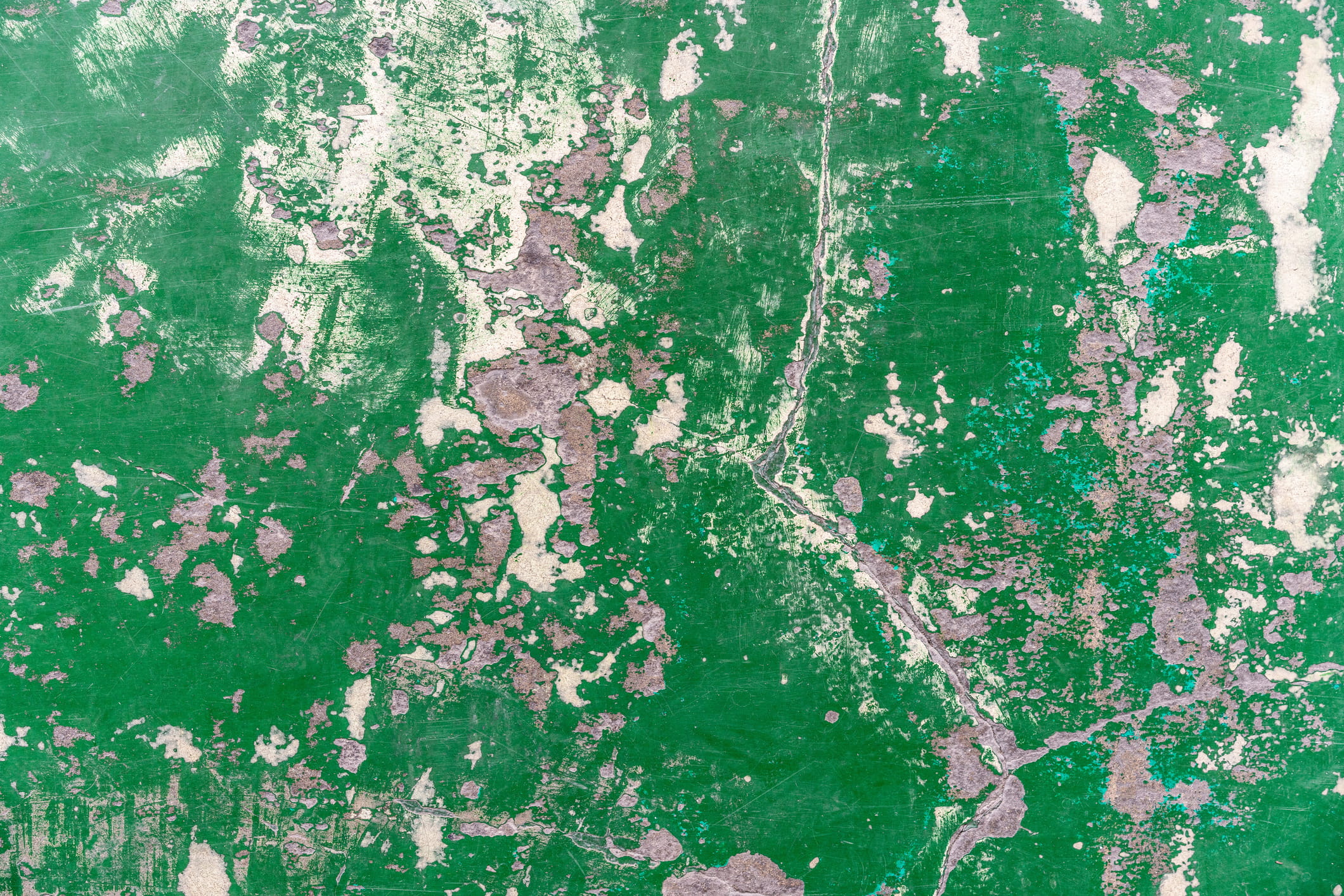
As pressure builds with nowhere to go, the coating bubbles, blisters, and eventually peels away from the slab. A white, chalky residue on the concrete surface, called efflorescence, is a sign this is already happening beneath your coating.
Freeze-Thaw Cycles
Boise's spring and fall shoulder seasons bring repeated freeze-thaw cycles that physically break down concrete. Water infiltrates micro-cracks in the slab, expands as temperatures drop below freezing, and generates internal pressure.
When a coating sits over concrete actively degrading from freeze-thaw stress, the top layer of the slab physically detaches and pulls the coating along with the failure.
Road Salts and De-icing Brines
The Ada County Highway District applies liquid magnesium chloride (MgCl), rock salt (NaCl), and sand throughout Boise winters. These materials track into garages on tires and boots, causing all kinds of damage.
Magnesium chloride stays in liquid brine form well below freezing, meaning brine sits inside micro-cracks long after temperatures rise in the garage.
As moisture evaporates, salt crystals grow within concrete pores. Crystal growth generates enough localized pressure to pop a coating off the surface or cause the concrete itself to scale.
Inadequate Surface Preparation
Poor surface preparation is one of the most common reasons floor coatings fail in Boise. Many DIY kits and budget contractors use acid etching, which does not achieve a profile deep enough for industrial-grade resins to form a strong mechanical bond.
Professional installations require diamond grinding, removing the weak laitance layer and opening concrete pores so the primer bonds directly to solid aggregate beneath.
Why Standard Epoxy Falls Short in the Boise Climate
While epoxy is a vital component of a high-performance floor, traditional or "DIY-grade" epoxy coatings have three critical weaknesses when faced with the Treasure Valley’s environment:
- No UV Stability: Under Boise’s intense summer sun, standard epoxy yellows and "chalks" at the surface.
- Lack of Flexibility: Traditional epoxy is often too rigid to move with concrete during our local temperature swings, which frequently range from the mid-20s to the low 90s.
- Extended Cure Times: Standard epoxy can take 3 to 5 days to fully cure, leaving it vulnerable to humidity during the process. In our climate, this often leads to amine blush—a waxy film that forms on the surface and prevents topcoats from bonding properly.
These are not minor drawbacks in a region like Boise. They are the reason so many epoxy floors fail here before homeowners expect them to, without proper preparation and industrial-level products.
How Garage FX® Epoxy and Polyaspartic Flooring Is Built for Boise and Beyond
GarageExperts® of Boise installs the proprietary Garage FX® epoxy and polyaspartic floor coating system, engineered as a layered solution for the specific conditions.
The epoxy fuses deeply into the concrete, increasing adhesion by three times compared to standard epoxy systems, while the polyaspartic delivers full UV stability and resistance to peeling, cracking, and more. We’re so confident in our system that it’s backed by a limited lifetime warranty.
If your garage floor shows bubbles, peeling patches, or tire-shaped marks, the current coating has already failed in the Boise environment. It’s time to upgrade to something better.
Schedule a free on-site estimate with GarageExperts® of Boise and see what a floor coating built for the Treasure Valley looks like.