

For most homeowners, the garage doubles as a workshop, storage room, and entry point into the house, all in one space. With that much daily traffic, it is easy to overlook small hazards that build up over time, a damp spot near the door, a tool left out from last weekend's project, or a shelf packed a little too full.
In Jacksonville, humidity and sudden summer storms can make those hazards more common than in drier climates. A few thoughtful changes to the floor and storage areas can go a long way toward keeping the space safer for everyone who uses it.
Why Garage Floors Can Become a Safety Risk
Bare concrete does not always show its weaknesses right away, but it responds to the environment more than most homeowners expect. In a humid, coastal climate like Jacksonville, that response can show up as a slicker, less predictable floor.
A few conditions tend to make garage floors riskier underfoot:
- Humidity and moisture. Jacksonville's humid air and afternoon storms can leave floors damp for hours, especially near the garage door.
- Vehicle drips. Oil, coolant, and water tracked in from a car create slick spots that are easy to miss.
- Dust and grit. Bare concrete tends to hold onto fine dust and sand, which can make the surface feel gritty and unpredictable underfoot.
- Uneven wear. Cracks and pitting in aging concrete create tripping hazards that are not always obvious at a glance.
None of these issues are unusual on their own, but together they can turn a quick walk through the garage into a slip risk.
Signs Your Garage Floor May Need a Safety Upgrade
Some warning signs are easy to spot. Others build up slowly enough that homeowners get used to working around them instead of addressing them.
A few warning signs are worth paying attention to:
- Slippery spots. Certain areas of the floor feel slicker than others, especially after rain or when a car has been parked inside.
- Visible cracks. Thin lines or gaps in the concrete can catch a shoe or a cart wheel.
- Dust buildup. A fine layer of dust or grit collects no matter how often the floor gets swept.
- Dim corners. Areas of the garage that stay dark make it harder to spot spills or clutter before stepping on them.
Catching these signs early makes it easier to address them before they lead to a fall.
How Slip-Resistant Garage Flooring Can Help
A professionally installed epoxy and polyaspartic floor coating creates a sealed surface that behaves differently than bare concrete, especially in a humid environment. Because the coating fuses to the concrete rather than sitting on top of it, it can help reduce how much moisture lingers on the surface.
An epoxy and polyaspartic flooring system can offer several practical safety advantages:
- Traction options. Homeowners who want extra grip in high-moisture areas can add a non-slip coating on top of the epoxy and polyaspartic system.
- Easier cleanup. A sealed surface makes it simpler to wipe away water, oil, or debris before it becomes a hazard.
- Less standing moisture. A fused coating helps keep dampness from pooling on the surface the way it can on bare concrete.
- A brighter surface. The polyaspartic topcoat creates a finish that reflects more light, which can make hazards easier to spot.
For garages that see a lot of moisture or foot traffic, the added traction from a non-slip coating is worth discussing during an estimate.
Keeping Tools & Equipment from Becoming a Trip Hazard
A slippery floor is not the only safety concern in most garages. Loose tools, cords, and stacked bins on the floor are just as likely to cause a fall.
A few storage habits can reduce everyday trip hazards:
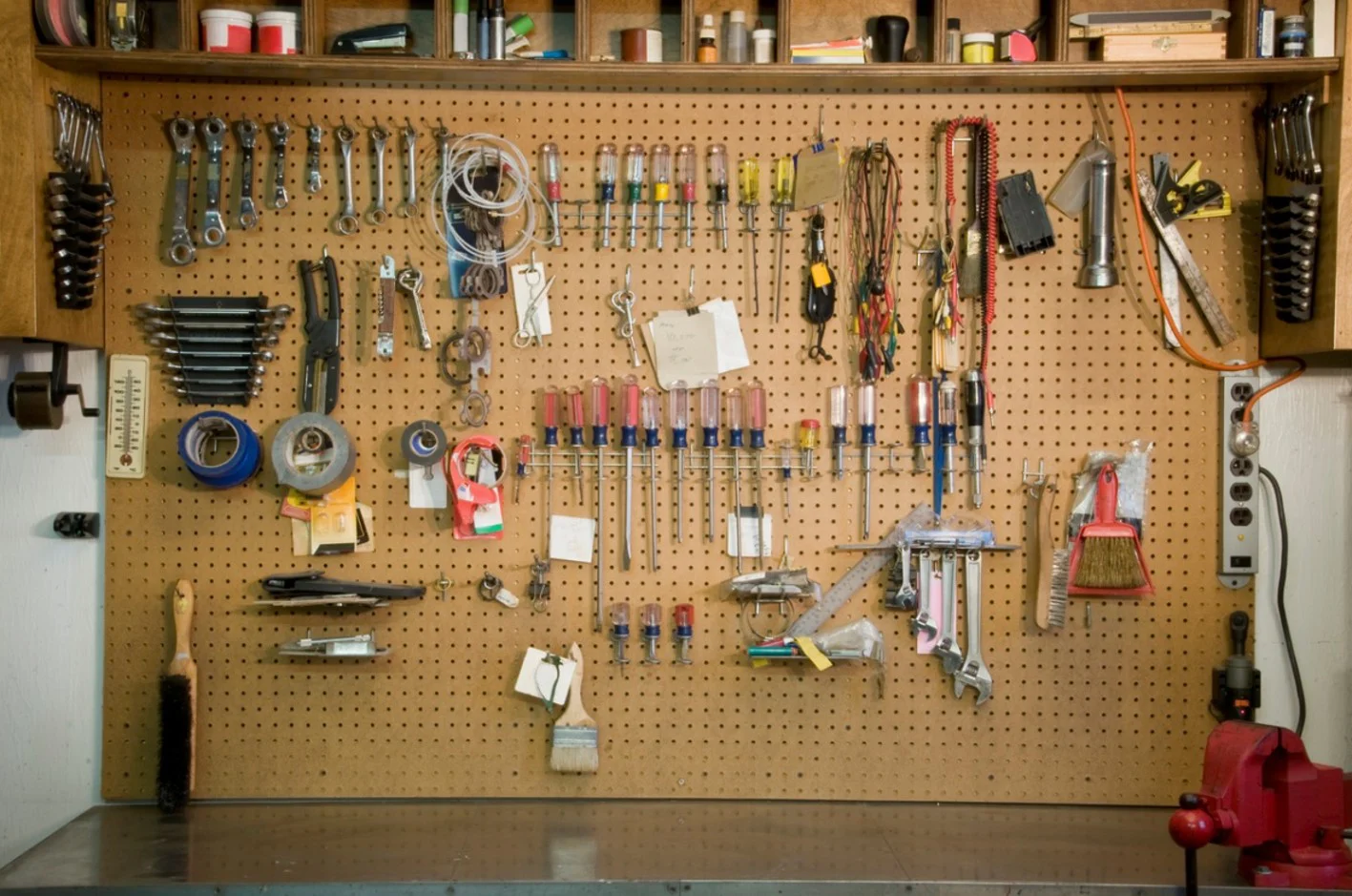
- Off the floor. Storing tools and equipment on a Slatwall system keeps items out of walking paths.
- Enclosed storage. Custom cabinets keep sharp or heavy items out of reach of children and pets while keeping the floor clear.
- Cord management. Extension cords and hoses left across the floor are one of the easiest tripping hazards to avoid.
- Weight limits. Overloaded shelving can shift or collapse, so it helps to keep heavier items on lower, sturdier storage.
A garage that stays organized day to day is naturally easier to move through safely.
Visibility & Everyday Awareness in the Garage
Even a well-maintained garage can feel risky if it is hard to see clearly. Visibility plays a bigger role in everyday safety than most homeowners realize.
A few small changes can improve visibility throughout the garage:
- Brighter lighting. Adding light fixtures near workbenches or storage areas helps highlight hazards before they cause a fall.
- Reflective flooring. A glossy epoxy and polyaspartic floor coating reflects more available light than bare concrete.
- Clear walkways. Keeping a consistent path from the door to the car reduces the chance of bumping into stored items.
- Light-colored storage. Lighter cabinets or Slatwall panels can make it easier to see items stored against them.
Small visibility improvements add up, especially in a space that gets used every day.
Make Your Garage Safer with GarageExperts® of Jacksonville
A safer garage does not usually come down to one single change. It is the combination of a more secure floor, better organized storage, and a space that is easier to see and move through.
GarageExperts® of Jacksonville helps homeowners address these concerns with our Garage FX® epoxy and polyaspartic flooring system, including the option to add a non-slip coating for high-moisture areas, along with custom cabinets and Slatwall organization solutions that keep tools and equipment off the floor. If your garage is due for a safety upgrade, our team can walk you through the options that fit your space.
Call (904) 441-6700 or contact us online to schedule your free estimate and see which garage safety upgrades make the most sense for your space.