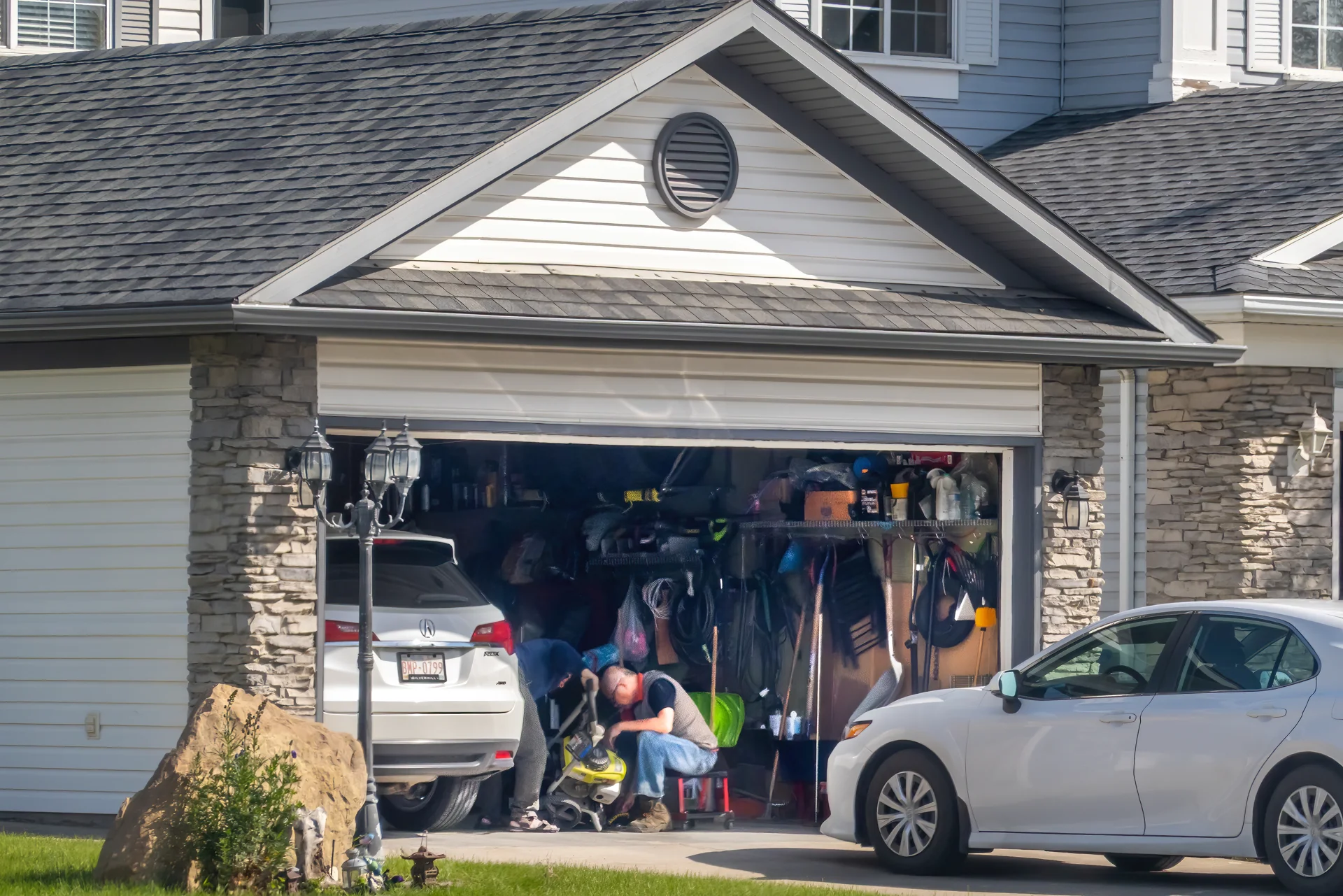
To cool down your garage, you need to stop heat from getting in, keep trapped air moving out, and add insulation or active cooling if needed.
Without the proper insulation or airflow, your garage traps heat all day long, often making your space 10 to 18°F hotter than the air outside. This is just as true during a summer heatwave as it is in hotter climates such as Phoenix or Houston in April.
The good news is a hot garage is a problem you can actually fix. Whether you use your garage for workouts, weekend projects, storage, or just parking your car, a few changes can help turn it back into a space you’ll be comfortable in.
Table of Contents
- Why Your Garage Gets So Hot
- How to Cool Your Garage: Step-by-Step
- No Windows In Your Garage? Here's What Still Works
- Cooling Your Garage in Year-Round Hot Climates
Why Your Garage Gets So Hot
Your garage gets super hot because it collects heat all day and rarely has enough insulation or airflow to let it escape. Between the direct sunlight, trapped air, and heat from everyday use, the space can quickly end up being much warmer than the rest of your home.
The heat in your garage typically comes from a combination of these factors:
- Sun exposure. A west-facing door or wall can take the hardest hit from the direct afternoon sunlight.
- Dark colors. A dark garage door or exterior paint absorbs heat instead of reflecting it.
- Little to no insulation. Many garages are built with minimal insulation to save on construction costs, letting heat pass straight through the walls and doors.
- Poor airflow. Without proper ventilation, trapped hot air just sits and builds up in your garage throughout the day.
- A hot car. A vehicle you’ve recently driven continues radiating engine heat for hours after you park it inside.
- Clutter on the floor. Stacked boxes and gear block natural airflow, while materials like cardboard and wood trap and hold onto heat.
- Appliances. An extra fridge, freezer, or water heater running in your garage adds heat of its own.
- Fluorescent lighting. Old fluorescent tube lights turn about 90% of their energy into heat instead of light. If your garage runs warm even at night, your lighting could be part of why.
Once you know where the heat is coming from, it's much easier for you to focus on the targeted fixes that will actually make a difference.
How to Cool Your Garage: Step-by-Step
Step 1: Cut the Heat Off at the Source
Start here. Blocking heat before it gets in does more than any fan or AC unit working against it later.
Insulate Your Garage Door
A thin metal garage door heats up fast in the sun and radiates heat inside like a space heater running all day. Adding a DIY foam insulation kit can help cut this heat down significantly.
If you aren't comfortable taking on the installation yourself, hiring your local professional is a great way to ensure the job is done safely and correctly.
Insulate The Wall that Takes the Most Sun
You don’t need to insulate every wall. If one of your walls faces the sun directly, insulating that wall alone makes a real difference on its own.
Seal the Gaps and Cracks
Hot air sneaks in through small gaps around your garage’s main door, side doors, and windows. Check the weatherstripping along the bottom and sides of your doors, adding fresh strips and caulk wherever it looks worn. This helps keep the space more comfortable year-round.
Park Your Hot Car Outside First
A car that has just been driven acts like a radiator for hours. If you plan to spend time in the garage after driving home, let the car cool in the driveway first before pulling it inside.
Move or Clear the Area Around Your Appliances
Running a garage fridge, freezer, or water heater constantly dumps extra heat into the closed room. If you can, move secondary appliances somewhere else, make sure they have space to vent, or keep the area around them clear so heat doesn't build up.
Switch to LED Lighting
If you're still using old fluorescent lights, switching to LEDs removes a heat source most people forget about.Fluorescents generate a surprising amount of heat, while LEDs run cool and use far less energy.
Block the Sun at Your Windows
Reflective window film, exterior shades, an awning, or insulated curtains can help keep the sun from heating the space before it gets inside. They can also help cut glare and help protect anything you store near a window.
Choose Lighter Colors If You Decide to Repaint
A lighter garage door or exterior paint color reflects heat rather than absorbing it like a dark one. It’s not worth repainting over on its own, but keep it in mind if you are already updating your siding or door.
Step 2: Get the Air Moving
Once you have cut off some of the heat, moving the air you have left makes the biggest difference in comfort.
Time Your Airflow Right
Open your main garage door and side door in the early morning or late evening to let trapped heat escape, then close everything before early afternoon.
If your garage door faces the sun directly in the evening, skip the evening open. Letting the sun hit an open door can add more heat than it releases.
Create a Path for Air, Not Just an Opening
One open door lets air in, but it needs somewhere to go. Open two points on opposite sides of the garage, like the main door and a side door, or two windows, so air actually moves through instead of sitting still.
Use Fans to Drive the Breeze
Set one fan near an opening to push hot air out, and a second on the opposite side to pull cooler air in. Point a third fan toward your workspace for direct spot cooling. While fans don't lower the actual room temperature, moving air feels significantly cooler on your skin.
Mount a Fan Up High
Heat rises and collects near the ceiling. A wall or ceiling-mounted fan keeps that trapped layer of hot air moving instead of letting it settle over your head.
Add a Garage Door Screen
A retractable or magnetic mesh screen lets you keep the main door open for maximum ventilation without inviting pests.
Run Fans on a Timer During Cool Hours
An outlet timer can turn fans on during early morning and evening hours and off during the hottest part of the day, so you are not just blowing hot air around at 3 p.m.
Coat your Garage Floor to Cut Heat & Humidity
Bare concrete acts just like a hot sidewalk. It soaks up heat during the day and radiates it back into your garage long after the sun goes down. Concrete is also porous, allowing ground moisture to seep up and make the air feel heavy and stuffy.
Adding a floor coating like epoxy or polyaspartic helps seal those pores, keeping moisture out and making the space easier to cool.
Check out our Garage FX® flooring system, which combines an epoxy base to block moisture with a polyaspartic topcoat built for daily wear.
Clear the Floor Clutter with Smart Storage
Gear and boxes stacked on the floor do more than take up space, they act like heat traps while blocking airflow across the room. Getting items off the ground with garage cabinets, slatwall, and overhead storage racks opens up your floor plan so air can actually circulate.
If you need help clearing the clutter, learn more about our custom garage storage solutions, or visit our blog for steps on how to organize your garage.
Step 3: Add Cooling Equipment (If You Still Need It)
If you spend a lot of time in your garage, working out, running a workshop, or tackling long projects, investing in equipment that actually lowers the air temperature is well worth it.
Keep in mind cooling equipment works best after you've already insulated and sealed the space. Otherwise, the cool air you’re paying for just leaks back out.
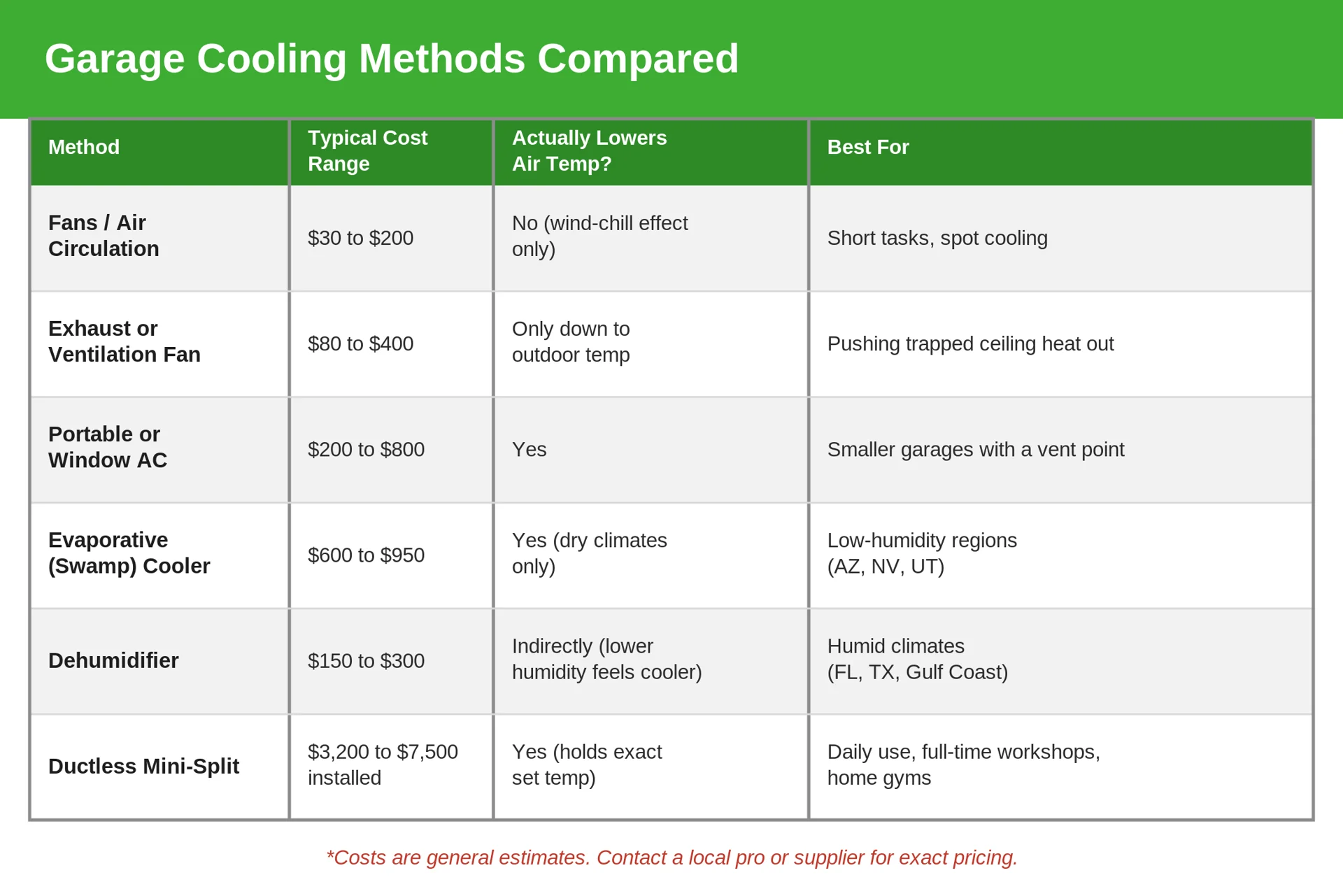
Here is how some of the main options compare:
A few things to consider before choosing cooling equipment for your garage:
- Window AC usually beats portable AC at a similar price. A portable unit's compressor and exhaust duct both give off heat inside the garage before that heat makes it outside. A window-mounted unit keeps more of that heat outdoors from the start.
- Swamp coolers only work in dry air. They add moisture to cool the air, so in a humid climate they will not help and can make the space feel stickier.
- A dehumidifier is worth it even though it adds some heat. Pulling moisture out of the air makes a humid garage feel noticeably cooler and cuts down on condensation, even if the unit itself runs a little warm.
- A mini-split is the most effective option for anyone in the garage daily. It holds a set temperature, runs quietly, and works for heating in winter too. Installed cost is the biggest barrier, but some owners report cooling a 100°F garage down to 60°F in under 2 hours.
- Check your actual numbers first. A $15 to $20 thermometer and humidity gauge tells you what you are really dealing with, and whether you are better off with a swamp cooler or a dehumidifier.
No Windows In Your Garage? Here's What Still Works
No windows in your garage? No problem. You can still cool the room effectively with a few simple workarounds:
- Crack the main garage door open about a foot instead of opening it all the way. Cool air comes in low, hot air escapes up high, and you still get airflow without leaving the space wide open.
- Vent a portable AC through the wall or a door panel. A short length of rigid duct running through a cut panel in a side door or a small wall vent works just like a window.
- Install a ductless mini-split. Mini-splits don't need a window at all. They only require a small hole for the line set, making them ideal for a windowless garage.
- Mount an exhaust fan. Installing an exhaust fan on the wall opposite your main door pulls hot air out even when the garage is closed.
- Keep air moving with fans. Even without fresh air coming in, running fans keeps stale air from settling into pockets of heat.
Cooling Your Garage in Year-Round Hot Climates
In places like Arizona, Texas, and Florida, heat isn't just a summer problem, it's a year-round issue.
With intense heat, no single fix handles the job alone. The key is to layer some of the solutions we previously mentioned together:
- Keep the heat out first: Start by insulating your garage door and sealing air leaks around gaps and frames.
- Add shade where possible: Use shade trees, awnings, or reflective window film on sun-facing sides to stop heat before it hits your home.
- Control moisture and open up airflow: Keep your floor space and walkways clear of clutter so air can move freely. In humid regions, an epoxy or polyaspartic floor coating seals porous concrete to block ground moisture from creating a sticky, stuffy room.
- Add multiple active cooling options: Add targeted cooling, like a mini-split, portable AC, or dehumidifier for the hours you are actively using your garage.
Stacking these together works far better than relying on any single fix, keeping your garage cool and comfortable even when the heat outside won't let up.
Create a Cooler, More Functional Space with GarageExperts®
Putting a few of these solutions to work will go a long way toward making your garage cooler and more comfortable on hot days. If you're looking to take it a step further and improve your garage's overall functionality, our team at GarageExperts® can help.
Our durable epoxy and polyaspartic flooring and custom storage solutions work together to get clutter off the ground and open up your floor space, helping your garage stay cooler, fresher, and more usable year-round.
Contact your local GarageExperts® to request a free on-site estimate today!